

One way to treat cancer is by surgery, i.e. the removal of the tumour by means of a surgical operation. Surgery is planned and carried out by a team of specialist surgeons working together with an oncologist, a radiologist, a pathologist and a physician specialising in nuclear medicine. Surgery is the first-line treatment for the majority of localised solid tumours. During surgery, some healthy tissue surrounding the tumour is also removed to prevent local cancer recurrence. Surgical treatment is always tailored individually. Docrates Cancer Center’s treatment path covers the entire cancer treatment chain ranging from diagnostics to follow-up after the treatments. Docrates’ partners in surgical care are Eira Hospital, Aava Medical Centre, Helsinki Hospital, Tampereen Sydänsairaala and HYKSin.
Surgical treatment for prostate cancer
In recent years, surgical treatment for prostate cancer has become less and less invasive along with the introduction of minimally invasive laparoscopic techniques. Recently, robotic surgery in particular has rapidly gained popularity in both the USA and Europe. Robotic surgery involves less bleeding and allows precise suturing, a speedy recovery, a short hospital stay and a shorter sickness leave. High-risk prostate cancer is increasingly treated by a combination of methods, planned and carried out by specialist surgeons and experts in nuclear medicine. Rapid technical development has made radiotherapy a good option, sometimes even the treatment of choice, for localised or locally advanced prostate cancer. Other urological cancers such as kidney (renal) cancer and bladder cancer are primarily treated by surgery. Martti Ala-Opas, Chief Urologist at Docrates Hospital, performs surgery for removal of prostate cancer, renal cancer and bladder cancer.
Surgical treatment for breast cancer
Breast cancer is usually treated by surgery combined with external radiotherapy and cancer chemotherapy if required. Breast-conserving surgery is also possible in some cases. Breast cancer procedures also include sentinel node dissection, i.e. the removal of the so-called sentinel lymph node to assess the status of axillary lymph nodes located in the armpit. If an ultrasound examination or needle biopsy shows that the cancer has spread to the axillary lymph nodes, all axillary lymph nodes are removed during the operation. All high-quality treatment units must be able to use this so-called sentinel technique. Leading units have also adopted the use of laparoscopic surgery instead of open surgery to speed up the patient’s recovery. In oncoplastic breast cancer surgery, cancer removal is combined with breast reconstruction. Both are performed during the same operation. This type of surgery is performed by leading plastic surgeons specialising in cancer surgery, or by cancer surgeons specialising in plastic surgery.
Surgeons
Urology, surgery

Ala-Opas, Martti
Chief Urologist, Assoc. Prof.
M.D., Specialist in Surgery and Urology

Taipale, Lauri
M.D.
Specialist in Surgery and Urology
Plastic surgery, breast cancer surgery
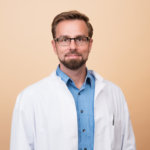
Jari Viinikainen
M.D.
Specialist in Plastic Surgery
Surgery, Oral and Maxillofacial

Pihakari, Antti
M.D.
Specialist in Oral and Maxillofacial Surgery

Jääskeläinen, Juha
M.D., Ph.D., Docent, Professor
Specialist in Neurosurgery
Törnwall, Jyrki
MD, DDS, PhD, Assoc. Prof.
Specialist in Oral and Maxillofacial Surgery